| Leicester Pathology Service - Annual workload
statistics |
|
|
|
|
|
|
|
|
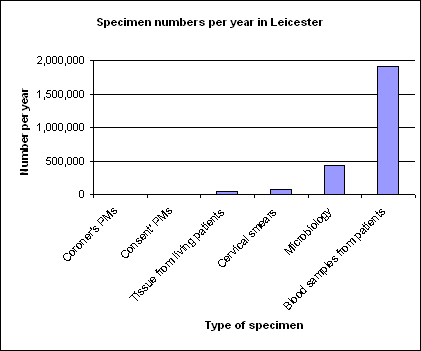
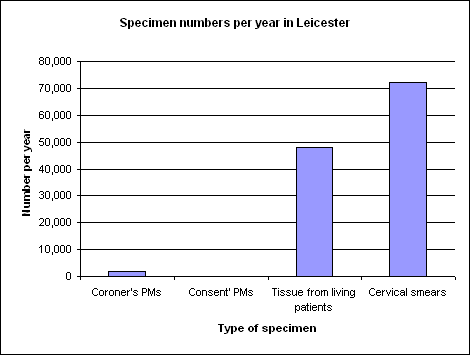
| Coroner's PMs |
1,893 |
|
Specimens from living
patients |
2,464,215 |
|
| Consent' PMs |
135 |
|
per post mortem: |
div. by |
2,028 |
|
| Tissue from living patients |
48,101 |
|
Equals |
1,215 |
|
| Cervical smears |
72,238 |
|
| Microbiology |
430,478 |
|
| Blood samples from patients |
1,913,398 |
|
|
|
|
|
|
|
|
|
|
|
|
|
|
|
|
|
|
|
|
|
|
|
|
|
| This
laboratory serves a population of just under one million. If these data are extrapolated to the whole
of the UK, then NHS laboratories |
|
| are processing approximately: |
147852900 |
specimens each year |
|
| One full-time job provides: |
110400 |
minutes of working time per year (60
minutes / hr x 40 hrs / week x 46 weeks / year) |
|
|
| If
requesting and recording consent takes just 1 minute per specimen, this is
equivalent to: |
1339 |
full-time jobs. |
|
|
(Equivalent to an average NHS
hospital!) |
|
| 1 minute
would actually be insufficient to ask the questions, allow time for thought,
listen to the answer, record the answer and transcribe it to a database. |
| There would
be no time to provide information or explanation. This is therefore a very conservative
estimate of the cost. |
|
|
| It
would therefore be more efficient to ask each patient once, rather than every
time a specimen is taken! |
|
|
| Professor
Peter Furness, Leicester General Hospital |
|
|
|
|
|
|
|
|
|
|
|
|
|